Mediterranean Vibes in Szeged – Tünde Hegedűs’s mural at the Hotel Piano reception desk
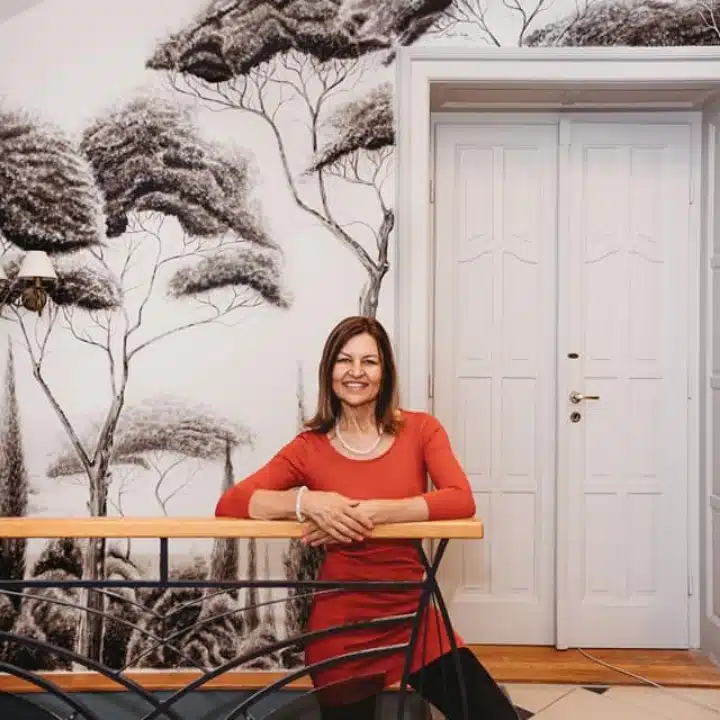
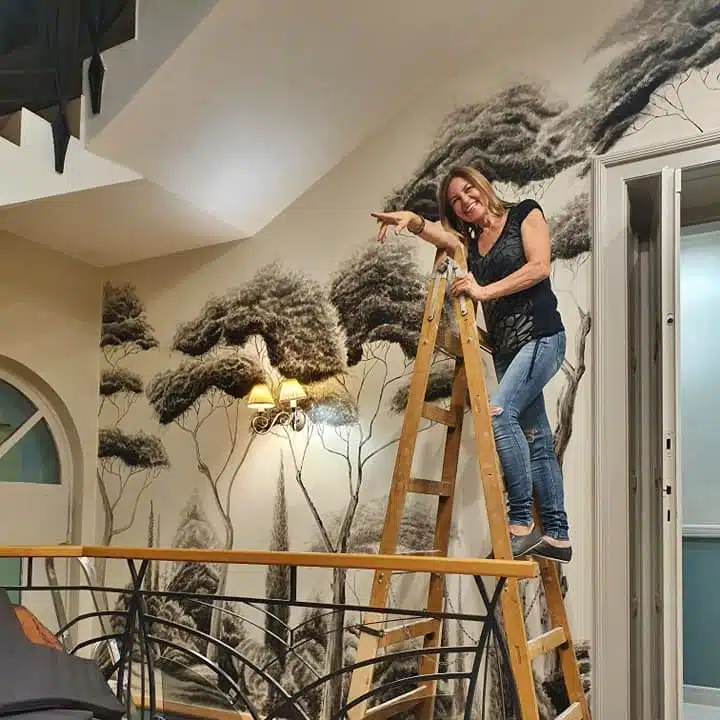
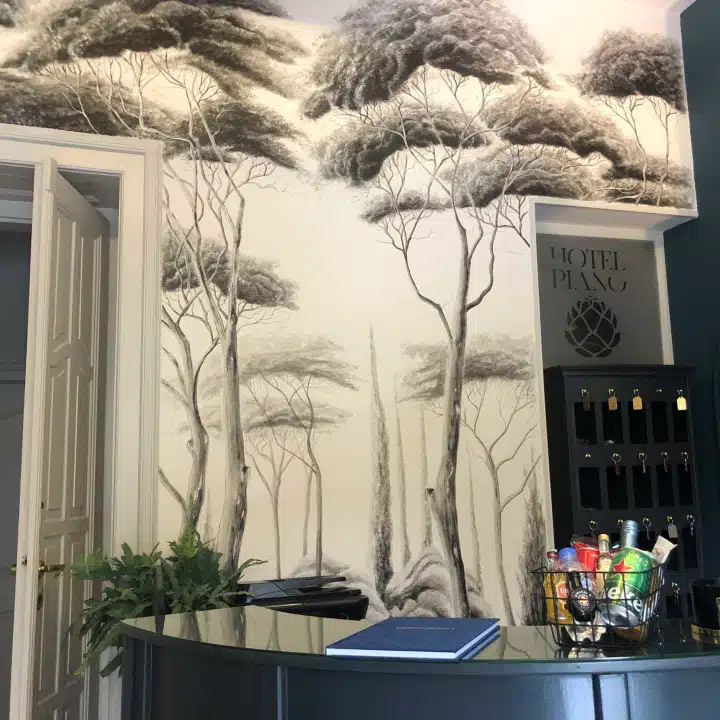
Upon entering the Hotel Piano in Szeged, guests often pause for a moment. First, their gaze is drawn to the unusual chandelier, and then, almost immediately, their attention is captured by the large mural adorning the reception wall. Many people mistake it for wallpaper and are always surprised to learn that the image is a hand-painted work of art, created by Tünde Hegedűs, a painter from Szeged.
Tünde Hegedűs – Creative Journey and Artistic Approach
Tünde Hegedűs has had a close connection to the arts since childhood: she drew, danced, and recited poetry; creative self-expression was a constant throughout her youth. She later earned degrees in engineering and banking and started her own business, but her passion for creating never waned. Painting is not a hobby that has been pushed into the background, but has become an integral part of his daily life, in which he is constantly seeking new forms and surfaces.
Her work is diverse: she creates bronze sculptures, paints unique patterns on clothing, creates canvas paintings, and also large-scale murals tailored to interior spaces . Thinking on a grand scale is a defining feature of her style: she enjoys creating works that fill an entire wall and instantly give the space its character. Her paintings are not merely decorations, but visual elements that create atmosphere and experience.
His works have been exhibited in several countries, and he regularly participates in international artistic collaborations. This openness and the diverse cultural influences are evident in his work, making his creations both contemporary and timeless.
Almond Trees and Italy – Mediterranean Inspiration
The mural on the wall at the Hotel Piano reception desk depicts an grove of stone pines. The stone pine—also known as pine cones (Pinus pinea)—is one of the best-known and most iconic elements of the Italian landscape, having defined the character of Mediterranean regions for centuries. With its characteristic, flattened crown, it is often found around Rome, in Tuscany, along seaside promenades, and in the gardens of historic villas.
In Italian culture, the stone pine is a symbol of tranquility, timelessness, and the Mediterranean way of life. It is not only visually striking but also holds gastronomic significance: the pine nuts it produces are a classic ingredient in Italian cuisine. This multifaceted cultural background makes it particularly well-suited to serve as the central motif of a space designed to welcome guests.
It brings the landscapes of Italy to the lobby of Hotel Piano
The mural at the reception desk was a deliberate choice: the depiction of an almond grove brings a Mediterranean feel to downtown Szeged and creates a special atmosphere the moment guests arrive. The natural motifs, warm colors, and generous composition convey both tranquility and elegance, in harmony with the character of Hotel Piano.
Tünde Hegedűs’s artwork is thus not merely a striking artistic element, but a defining part of the hotel’s visual identity. The painting helps ensure that, for guests, Hotel Piano is not just a place to stay, but a memorable experience where art and Mediterranean inspiration come together naturally.
 English
 Magyar